
The Benefits of Low-Emissivity (Low-E) Glass in Double Glazing
If you’re familiar with double glazing then you’re probably already aware that among the main advantages of this innovation is that it makes properties energy efficient and sustainable.
But did you also know that it’s possible to take this efficiency to another level with low emissivity glass?
In this article, you will discover the technology behind low emissivity (low-e) glass as well as gather insights on how this invention can improve the performance of your double glazed windows.

Key takeaways
• Low emissivity glass is a specialized glass with a transparent, microscopic coating that limits a property’s heat gain during warmer months and prevents heat loss during colder months.
• Double glazed low-e windows are more thermally efficient (U-value ~0.9 W/m2K) and have lower solar energy transmittance (G-value ~0.14) than conventional double glazing units with standard glass (U value ~1.3 to 2.8 W/m2K; G-value ~0.7).
• With the integration of low-e glass, a double glazed window can have an improved energy efficiency and energy-saving potential while reducing a property’s greenhouse emissions, ensuring its compliance with building codes, and positively impacting its value.

Compare Glazing Prices

Get quotes from local installers
1 fast form = 4 low quotes
Save up to £703 per year


What you’ll see here:
The Science Behind Low-E Glass
The Solar Energy Spectrum
The sun emits electromagnetic (EM) radiation with varying wavelengths and the three most important in this case are UV light, visible light, and infrared light.
• UV light – an invisible EM radiation with wavelengths of 100 to 400 nanometers. Overexposure can lead to the fading of furniture, fabrics, and other materials.
• Visible light – encompasses all types of EM radiation that can be perceived by the human eye in different colours. The wavelength of visible light is in the range of 400 to 700 nanometers.
• Infrared light (IR) – has wavelengths of 780 nm to 1000 μm. It is experienced by humans as thermal energy or “heat” and may come in two forms: as solar radiation or as a thermal emission by the planet.
Thermal Emissivity
A huge portion of the sun’s energy is absorbed by the planet, giving it thermal energy or heat. Consequently, this enables all things with a temperature higher than absolute zero to emit the energy back into the atmosphere, a phenomenon measured in terms of emissivity.
By definition, emissivity is the ratio of the energy radiated from a material’s surface to that radiated from a perfect emitter (blackbody) under identical circumstances. Ranging between 0 (perfect reflector) and 1 (perfect emitter), different materials have varying emissivity values. For example, aluminium has an emissivity of 0.1 to 0.2, tin has 0.25, and polished silver has 0.02 emissivity. In comparison, standard clear glass has an emissivity of 0.9, which means that it allows 90% of thermal energy to escape through it.
Applying this concept to actual household settings, the high emissivity value of standard clear glass becomes a problem during: (1) cold winter months when homes need as much thermal energy to stay indoors, and (2) during the warm summer months when homes need to keep the heat outside.
What is Low-E Glass and How Does it Work?
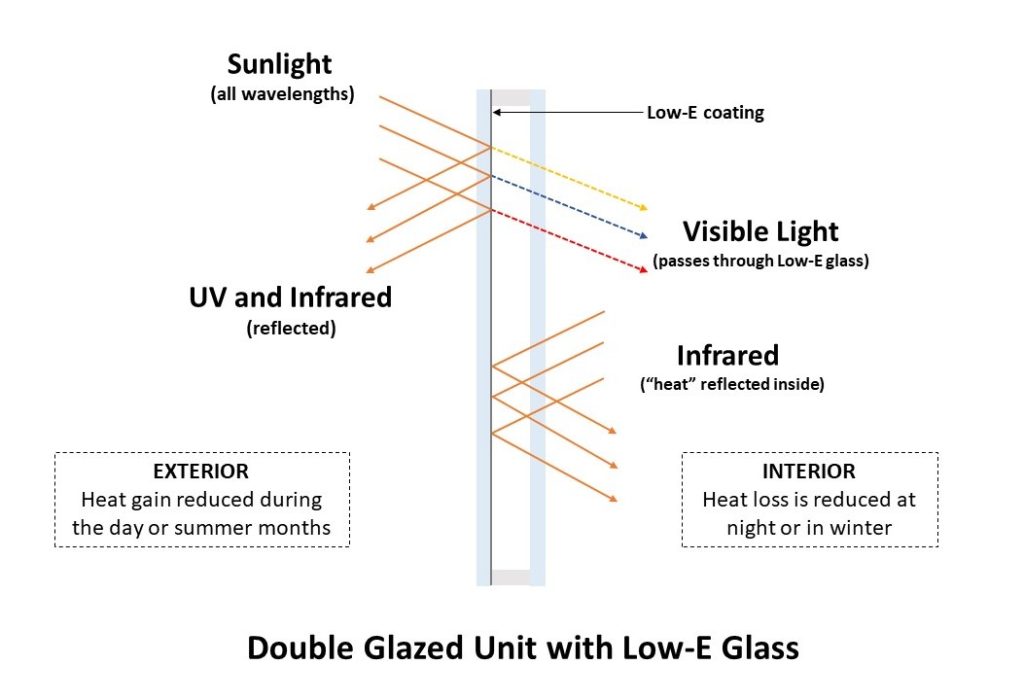
Low-e glass contains transparent and ultrathin coatings of silver or other low-e materials that serve two primary functions. One is it reflects incoming infrared energy and harmful UV rays, limiting a property’s heat gain during warmer months. The other is it reflects infrared energy back indoors to prevent heat loss during colder months.
Benefits of Low-E Glass in Double Glazing
1. Improved Thermal Efficiency
About 10-50% of a property’s thermal energy loss occurs through its windows and doors. Of this, around 90% of the energy lost via windows is through the glass panel. This will not be an issue if you have low-e coated double glazed units as the superior insulating capacity of low-e glass can give your window a thermal transmittance or U-value as low as 0.9 W/m2K. In the subject of thermal efficiency, the lower this U-value gets, the more thermally efficient is a window. For reference, standard double glazed windows have U-values ranging from 1.3 to 2.8 W/m2K while triple glazed ones have 0.6 to 0.9 W/m2K.
2. Controlled Solar Gain
As low-e glass reflects incoming infrared light from the sun, the solar energy gained by a property decreases. This keeps the interior of your home cool which is especially convenient during hot weather conditions. When combined with a tint, low-e glass is often called a solar control glass and can have a solar energy transmittance coefficient or G-value as low as 0.14. This translates into 86% of solar thermal energy being reflected away.
When assessing a window’s energy efficiency, both U- and G-values are major performance indicators.
3. Long-term Energy Savings
If you install double glazed windows with low-e glass, your property’s HVAC system won’t have to work as much to maintain a comfortable indoor environment. This reduces your energy consumption which could also result in energy savings. In a report by the U.S. Department of Energy Efficiency and Renewable Energy, low-e windows have been found to generate energy savings following a 30-40% decrease in energy use.
Taking into account the 20- to 30-year lifespan of double glazed windows, the money that you’ll save from energy bills would likely accumulate to a considerable amount in the long run.
4. Reduced Carbon Footprint
Not only will you have decreased energy consumption with double glazed low-e windows, your property will also exhibit a reduction in greenhouse gas emissions associated with its cooling and heating systems. Choosing this type of window will allow you to take part in urgent initiatives for environmental conservation such as increasing your home’s energy efficiency and lowering its carbon footprint.
5. Protection from Harmful UV Rays
Prolonged exposure to UV radiation can cause structural damage and colour fading to furniture, carpets, curtains, and other interior decor. With double glazed low-e windows, you won’t have to worry about these complications as the coated glass can effectively block harmful UV rays without compromising visible light transmittance.
6. Compliance with Building Regulations
In the UK, it is important to comply with the government’s building regulations related to double glazing to avoid legal issues in the future. Document L states that new windows must have a U-value of at least 1.4W/m2K. With that, double glazed low-e windows are more than compliant with their estimated U-value of 0.9 W/m2K.
In addition, double glazed windows that meet the building requirements typically have a G-value of around 0.7 but low-e glass can take this coefficient even lower to roughly 0.14.
7. Positive Impact on Property Value
If your property has double glazed low-e windows, you’re most likely at an advantage when it comes down to renting or selling them. Energy-efficient, sustainable, money-saving, and regulation-compliant windows would be appealing home attributes for prospective occupants.
Considerations for Low-E Glass in Double Glazing
1. More Costly
Low-e glass is more expensive than standard glass by about 15%, an important consideration when deciding whether or not to incorporate it in your double glazed window. On average, the price of low-e glass comes in around £30 to £60 per square metre for a single unit. Depending on your needs, however, this could be a fair trade-off for all of the benefits that you can get after installing them.
2. Reduced Visibility
While it’s true that low-e glass allows visible light transmission, a tinted layer like that in a solar control glass may decrease the entry of natural light into your home by 25 to 85%, depending on the specifications of the low-e coating. But if you prefer to reduce indoor glare, then you might find this characteristic beneficial instead.
How to get great offers on efficient windows?
To get the best deals for double glazed low-e windows, you should be able to compare features and prices from multiple trusted suppliers in the UK. Ecopreneurist can help you do that with its consumer-friendly quote comparison tool. This is a free and no-obligation service where you will be providing details of your ideal windows and Ecopreneurist will give you four of the best quotes from more than 38 reputable companies. Deciding whether or not you’ll hire any of them is entirely up to you.
What is a low-e glass?
Low-e glass is a specialized glass coated with a transparent and ultrathin layer of silver or other low emissivity materials to reflect infrared energy back into the room and reduce heat loss through windows.
What metals are used in low-e glass coatings?
Low-e glass typically has a transparent and thin coating of silver, zinc, or indium tin oxide. All of these materials have lower emissivity than standard clear glass.
What are the different types of low-e coatings?
Low-e coatings may be categorized based on their function. Passive low-e coatings aim to maximize the infrared energy gain of a property, creating a “passive” heating system, while solar control low-e coatings are designed to limit the amount of solar energy that enters a property to maintain a cool indoor temperature.
Can I use low-e glass for my double glazed window?
Yes, you can choose low-e glass for your double glazed window. Depending on what matters more to you, you may also decide the placement of the low-e coating within the unit. A passive low-e coating on the interior surface of the indoor-facing glass sheet would maximize solar gain whereas a solar control low-e coating placed on the interior surface of the outdoor-facing sheet would block solar energy and improve insulation.
Is low-e glass more energy efficient than regular glass?
Yes. Low-e glass is more energy efficient than standard glass. Double glazed low-e windows can have a U-value as low as 0.9 W/m2K and an average G-value of 0.14. On the other hand, conventional double glazing units have U-values ranging from 1.3 to 2.8 W/m2K and a G-value of about 0.7.
Now read:
Written By

Reviewed By
