
8 Most Common Window Types & Frames
Windows play an often overlooked but crucial role in shaping the style of your home, defining each room and controlling the influx of natural light and ventilation.
But before you decide which type you need, let us show you the key points and prices of each style to help make your decision easier.
- The average price for installing a new window is anything between £600 to £3,600 per window.
- Choosing the right type of window for each room will not only increase its aesthetic appeal but also save you money in the long run by improving ventilation, energy efficiency and security.
Whether you’re a new homeowner or renovator looking at windows for your starter house, an energy-efficiency advocate interested in learning more about eco-living and recent technological innovations or a casual reader interested in architecture, design, or construction, this guide is just for you.
8 Most Common Window Types
| Window Type | Description | Estimated Cost* |
|---|---|---|
| Casement | Suits most types of properties. Usually hung from the side to open like a door, it can be opened from the top or bottom. | £160 – £825 |
| Tilt & Turn | Opens in several directions and can be securely left open on a tilt for ventilation. | £200 – £1,030 |
| Sash | Has two framed panels that slide up and down crossing over | £240 – £1,240 |
| Sliding | Opens to the side, sliding horizontally | £270-£1,350 |
| Bay | Projects out from the exterior wall line and extends to the floor. | £1,190 – £1,800 (3 panels) |
| Bow | Projects from the room and ‘floats’ without the wall underneath. | £1,426-£1,674 (3 sections) |
| Skylight | Floods a room with light from an angled ceiling. | £500-£2,000 |
| Transom | Traditionally used above internal doors as a form of air conditioning. | £1,797-£2,500 |
* Estimated costs were computed using high-quality uPVC frames with double glazing. You should compare these prices with Ecopreneurist to stay up-to-date with current market rates.
Compare My Window Prices

Get quotes from local installers
1 fast form = 4 low quotes
Save up to £703 per year


Casement Window
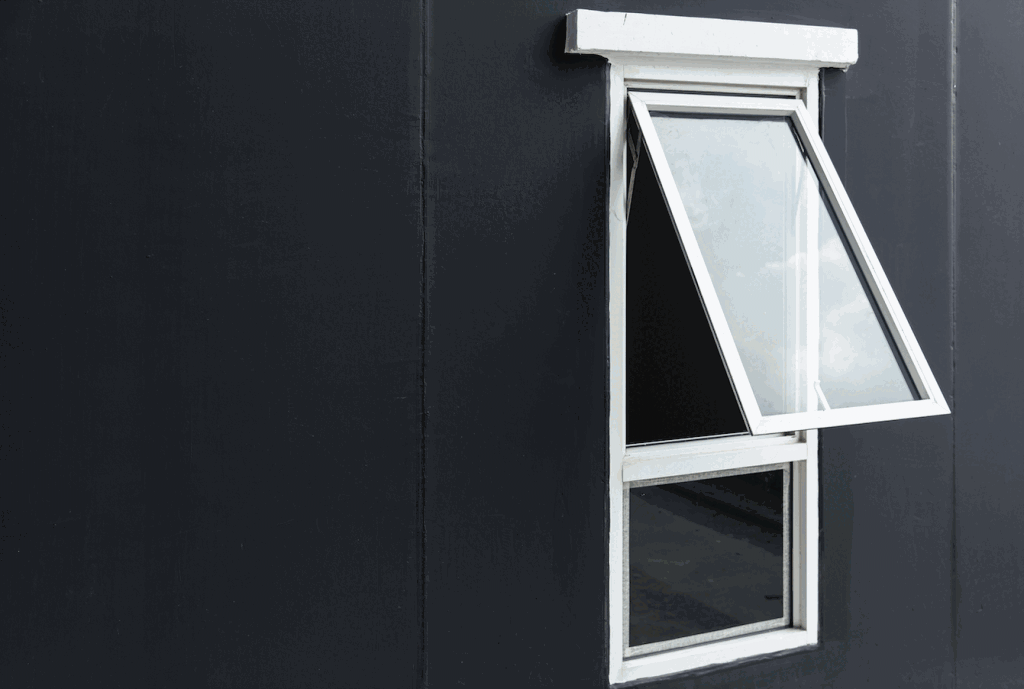
Casement windows are the most versatile style of frame in the UK.
Depending on the size of your opening, casement windows can be adjusted to have single, double or triple panels and can be opened on one side, both sides or even full frame to give you maximum ventilation.
| ✔ Thermally efficient ✔ Highly secure ✔ Relatively inexpensive | ✗ Mechanical parts may wear or break ✗ Not suitable for window air conditioning units ✗ Prone to damage if left open |
Tilt & Turn Window
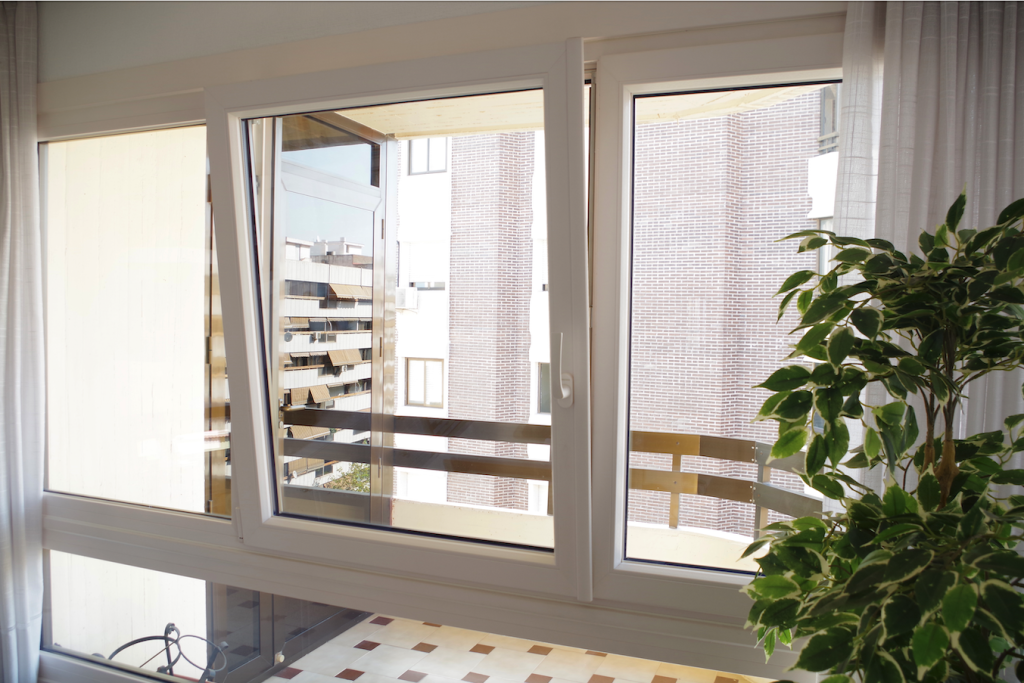
Tilt and turn types are popular because they allow windows to open in several directions and be securely left open on a tilt for ventilation.
Unlike casement types that open outwards, tilt and turn windows open inwards and can be fully opened so you can clean the entire external glass from inside your house.
With this type, you can clean the outside of your house while staying inside, perfect for windows on upper floors.
| ✔ Opens for easy cleaning ✔ Tilts for secure ventilation ✔ Cost-effective | ✗ Less suitable for period properties ✗ Requires more physical effort to open or close ✗ May create slipping problems |
Sash Window
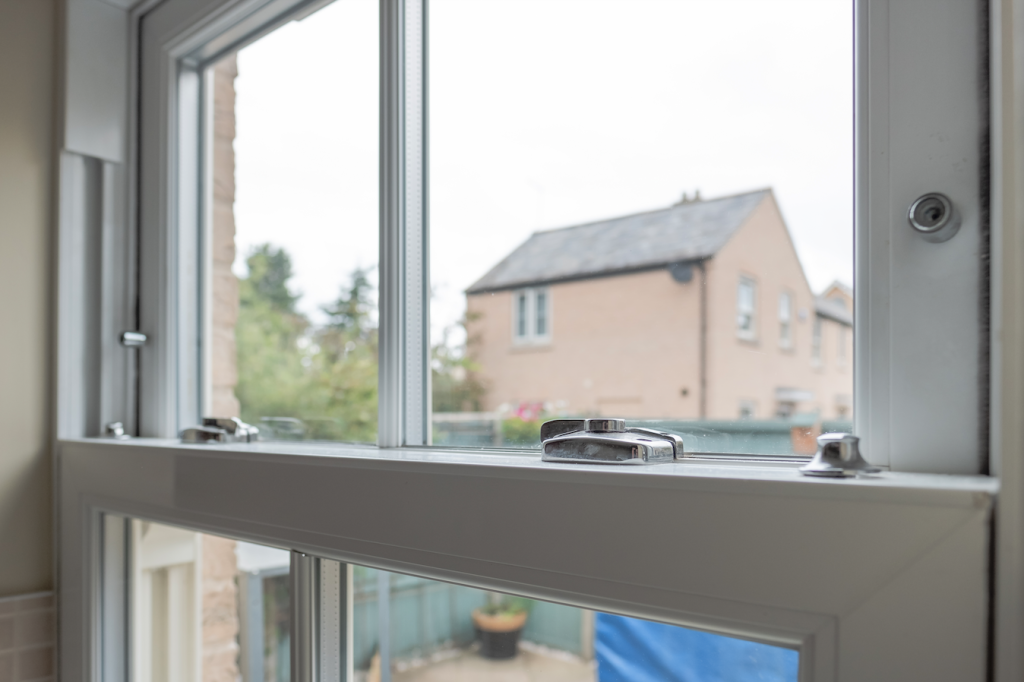
This type is often considered to be the most aesthetically pleasing window and adds significant property value.
You usually find sash-type windows in period properties such as those located in London. The vented opening at the top and bottom of the window creates a draw of air that will give your home superior ventilation and decrease the need to blast your air conditioning units on high or use extractor fans.
| ✔ Simple and timeless style ✔ Increases ventilation ✔ Increases home security | ✗ Low noise reduction ✗ Difficult to clean ✗ Seal isn’t weathertight |
Sliding Window
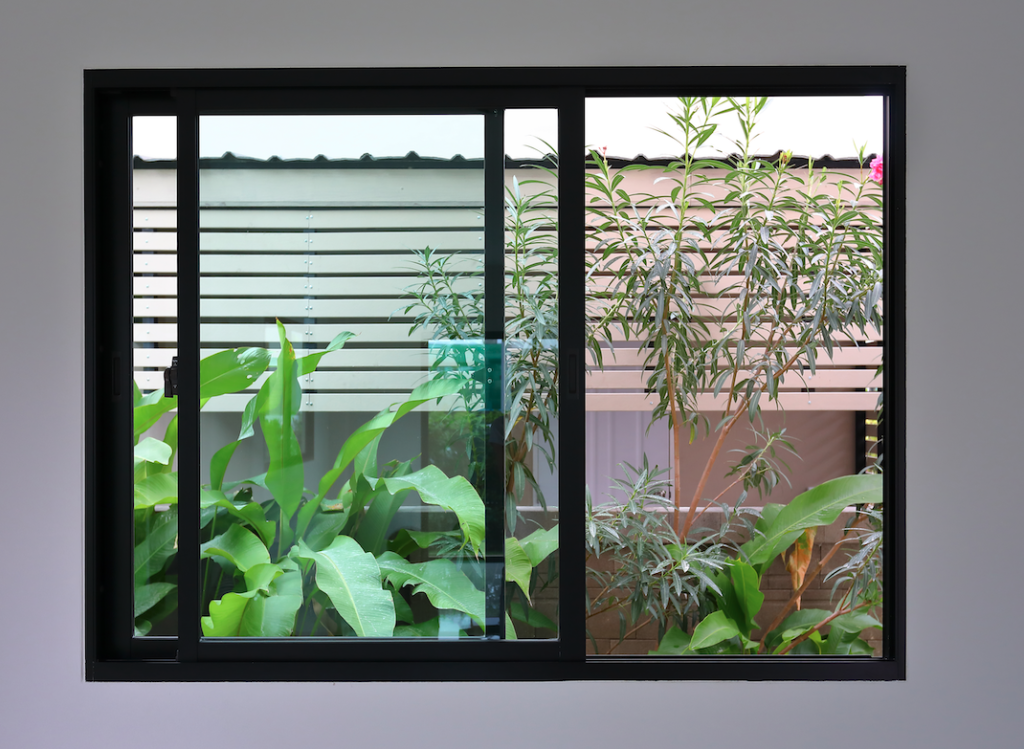
Sliding windows are best suited for contemporary builds that are designed for sleek homes. Sliding windows can open up spaces to the outside and look like a mini patio door.
These are perfect for kitchen areas where you can easily slide the window behind the sink open or for kitchen windows that open directly to your patio or terrace to allow for efficient serving.
These windows are also often used as egress windows which is not a window style but is a safety measure to allow for escape in case of an emergency.
While any style of window can be an egress window as long as it meets the building regulations, sliding types are ideal for these as they are durable and easy to open in high-pressure situations.
| ✔ Inexpensive to install ✔ Good option for egress windows ✔ Easy to operate and durable | ✗ Challenging to clean ✗ The centre frame can obstruct views ✗ May get stuck over time |
Bay Window

If you’re looking for a Victorian or Edwardian-styled house, you might want to use a bay window as the focal point of your living room. These windows are suited for houses with a great outside view as they offer an extra panoramic viewpoint from the projecting window.
Bay windows can also flood extra light into a room. They are typically utilised for reading spaces to maximise your usage of natural light in your room.
| ✔ Architecturally interesting ✔ Good for natural light ✔ Adds square footage to your home | ✗ Difficult to find quality blinds ✗ High price ✗ Might require planning permission. |
Bow Window
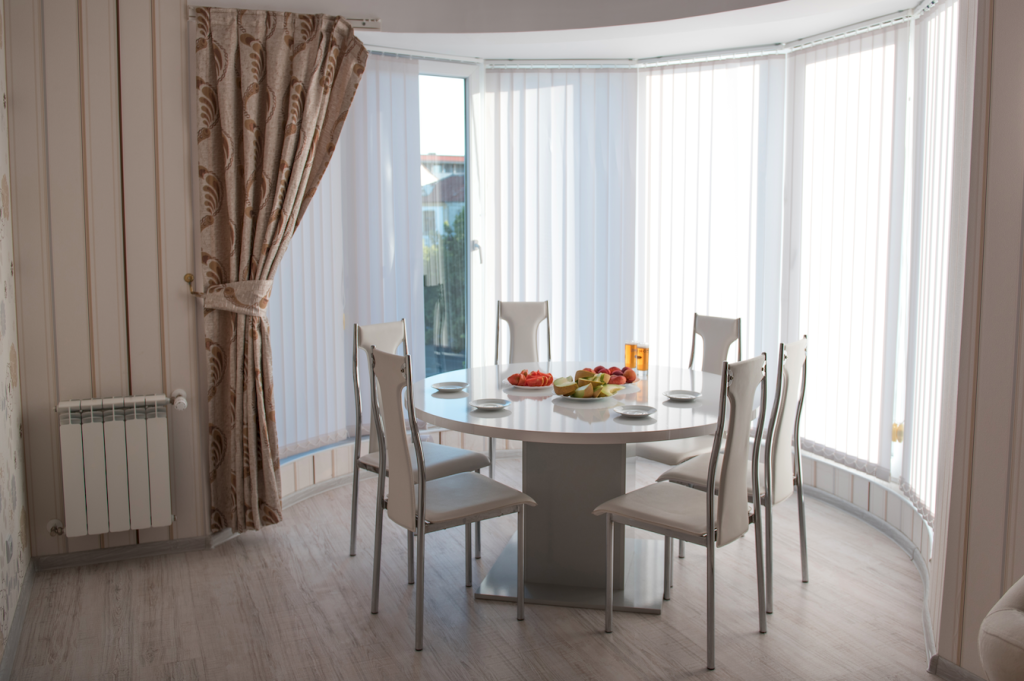
Bow windows are also sometimes called garden windows as these bright spaces are ideal locations to place a shelf to grow plants or create the illusion of space.
Bow windows can also be made up of several windows to create a curved effect and when placed at the front of your property, they can allow more visibility on a street.
| ✔ Good for natural light ✔ Makes your room look bigger ✔ Do not require building permission compared to bay types | ✗ Expensive ✗ Require skilled installation ✗ May block walkways |
Skylight
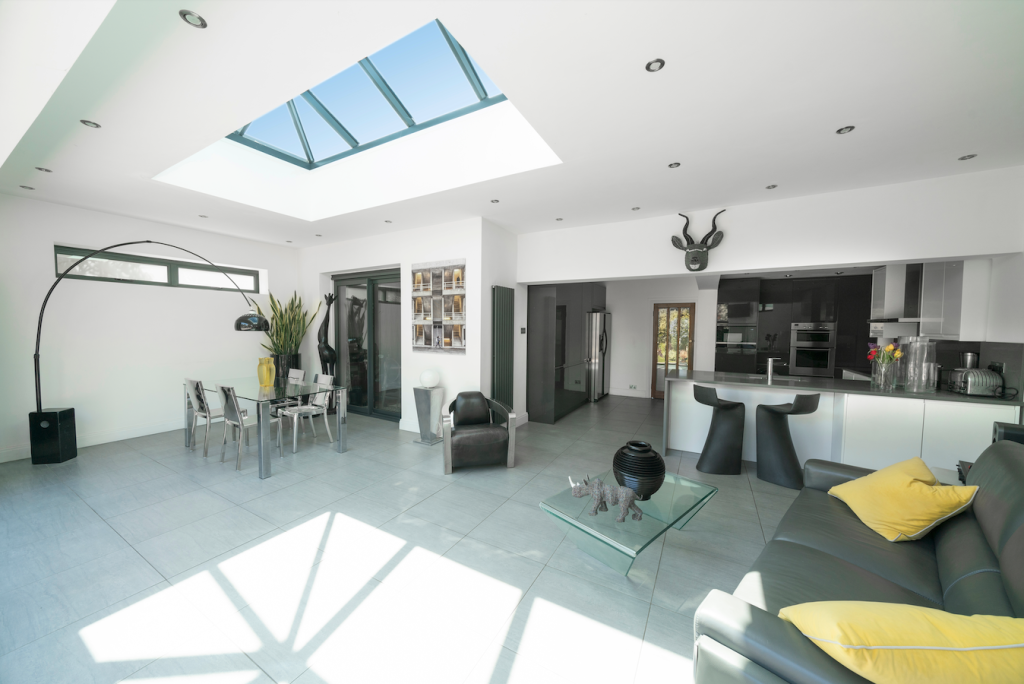
Skylights are usually used in contemporary houses and are placed in areas such as kitchens, or dining rooms because skylights are used to flood a room with light from an angled ceiling.
A series of skylights can offer maximum light into the room while retaining insulation that you would not be able to get from a fully glazed roof.
| ✔ Provides natural light to dark interiors ✔ Helps with interior solar heating ✔ Aesthetically appealing | ✗ Susceptible to damage from hail ✗ Improper sealing can result in leaks ✗ Challenging to open and clean |
Transom Window
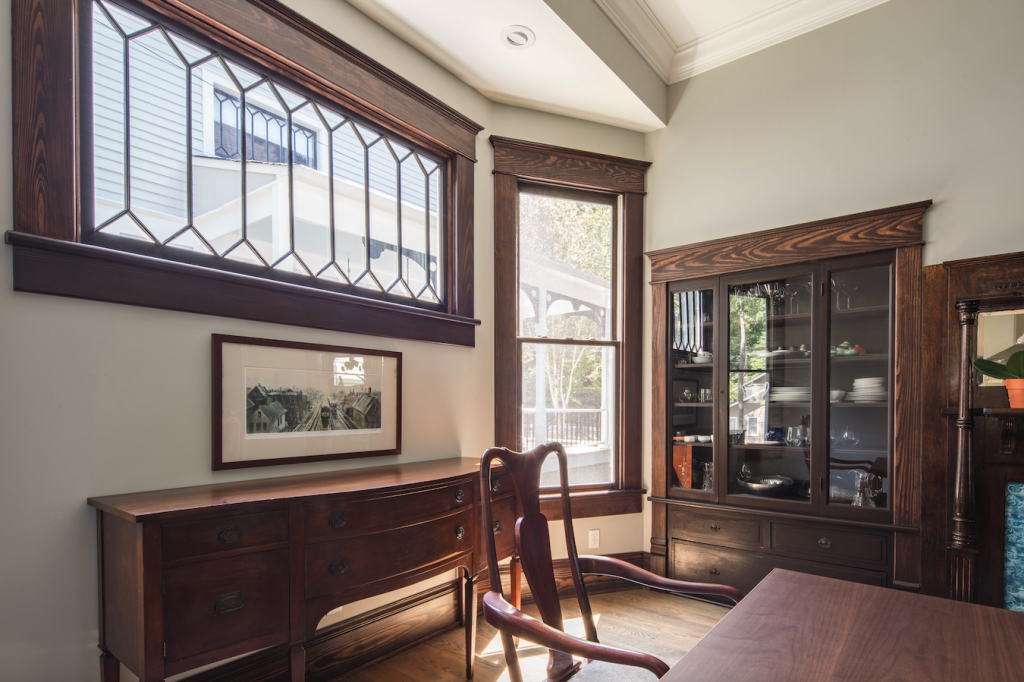
Transom windows are also known as fanlights and create a unique aesthetic appeal to your house when decorated using coloured glass with a sunburst pattern.
The transom window opens above the door to create a draw from a fireplace to move the warmth to upstairs rooms during winter.
In the summertime, front and back transom windows are left open to increase air circulation to keep the house cool.
| ✔ Weathertight ✔ Offers light and privacy ✔ Complements historical-style homes | ✗ No view of the outside ✗ Thinner panes are not as energy-efficient ✗ Might make your home seem dated |
Energy-saving techniques for your windows
The beauty of finding the perfect window for your dream house is making the best use of natural light to illuminate your rooms.
Do you see where I’m going with this?

Key Information
Your energy consumption for heating, cooling and lighting will be reduced with energy-efficient windows. You’ll not only be spending less on electric bills but also be doing Mother Earth a favour by decreasing your environmental footprint.

Here are some innovative technologies you can utilize to have energy-saving windows:
Double or triple glazing: Windows designed for energy efficiency often use multiple layers of glass that minimise heat transfer. Increasing the glass layers of your windows enhances insulation so you can have consistent indoor room temperature and better air quality.
Thermal breaks: Thermal breaks prevent direct heat or cold transfer between a building’s interior and exterior. Choosing materials like vinyl, fibreglass, or wood-clad window frames with insulating components will help minimise thermal conductivity.
Window Frame Prices
| 600 x 900mm | 900 x 1200mm | 1400 x 1400mm | |
| uPVC | £160 – £990 | £200 – £1,065 | £230 – £1,240 |
| Aluminium | £210 – £1,290 | £260 – £1,390 | £300 – £1,615 |
| Timber | £240 – £1,485 | £300 – £1,600 | £345 – £1,860 |
These prices are averages and you should compare these with Ecopreneurist to know the most updated price estimates.
uPVC window frames are generally the lowest cost option and are easy to maintain as they only need an occasional wash to keep looking clean.
Aluminium is a stronger material but they are prone to condensation and will be cold to the touch during wintertime.
While timber is the most expensive option and requires the most upkeep in terms of repainting and refinishing costs, it’s still a popular choice because it’s suited for old properties and gives a different aesthetic that can significantly increase your property’s value.
Sealing and weather stripping: Maintaining a tight seal around windows and doors is crucial for preventing air leaks. Using high-quality weather stripping and caulking helps establish this seal to reduce drafts of wind from entering your home and improve overall energy efficiency.
Armed with all this new information, what comes next?
Choose a window type suited to the style of your house.
It’s important to consider the style of your house and its surroundings to avoid creating confusion of style.
If you’re living in a period stone cottage, choosing uPVC windows will compromise the traditional charm of your home so it would be better to choose timber sash or casement windows that would harmonize with the house’s appeal.
Remember that replacing timber sash frames with uPVC in period-style houses can significantly diminish their property value.
On the other hand, if you’re looking to build a house with a contemporary build, more expensive glass areas and sleek aluminium frames will accentuate the architecture’s clean lines and maximise natural light.
When choosing your window type, ask yourself these three questions:
- Original Window Style: What was the original style of windows installed in the house?
- Material Suitability: What window frame aligns with the house type?
- Your vision: What window best aligns with how you envisioned your home to look like?
Avoid being swayed by current trends when replacing windows.
You can compare current market prices with Ecopreneurist to determine the cost-effectiveness of your chosen window material and type before you make a final decision.
Future-proofing your home includes asking yourself whether the style you want will stand the test of time or appear dated in a decade.
Always prioritize choices that create a unified look with the house to create a cohesive aesthetic.
What are the most common types of windows in the UK?
The most common types of windows in the UK include casement windows, sash windows, tilt and turn windows, and sliding windows.
What are the benefits of double-glazing in windows?
Double glazing involves two layers of glass with a layer of air or gas in between. This design enhances energy efficiency by reducing heat loss, noise, and condensation.
Are there regulations for window installations in the UK?
Yes, building regulations in the UK specify requirements for window installations to ensure safety, energy efficiency, and proper ventilation. It’s essential to comply with these regulations.
Can I replace my windows myself, or do I need a professional?
While some people may choose to replace windows themselves, hiring a professional installer is generally recommended to ensure proper installation, adherence to regulations, and warranty coverage.
Written By

Reviewed By
