
How to Care for Your Windows: Top Maintenance Tips

The best way to care for your window is to clean it at least twice a year. You will only need warm soapy water and a non-abrasive cloth to get the job done.
Always be on the lookout for signs that your window needs replacement: draughty sensations near the windows, condensation between the panes, and unusually high electricity bills.
In this guide you’ll find:

Key takeaways
- No material is maintenance-free whether it is uPVC or timber.
- Maintaining windows will save you a lot of money down the line.
- Always use the right tool and cleaning solution to avoid damage.
- It is far cheaper to maintain windows than to replace them.
- However, you’ll save more money and keep yourself healthy by replacing windows that are beyond repair.

General Care Tips for Your Windows
✓ Clean your windows at least twice a year to prevent moulds, mildew, and excessive dirt buildup.
- ✓ You may need to clean your window more often if you live near a construction site, a production site, the sea, or along a busy street.
- ✓ Spring is a good time to clean windows to clear up grime from summer storms and prevent pollen from accumulating.
- ✓ It’s best to clean windows on cloudy days or in the early morning or evening. Water can dry up too quickly on hot days, which can leave streaks.
- ✓ Check the weather stripping every few months to make sure that your windows are air-tight. Be on the lookout for tiny gaps or cracks which can allow condensation to form in between the panes.
- ✓ Reputable manufacturers offer after-sales service. They can offer help when unexpected issues happen with your windows after installation.
Compare Window Prices

Get quotes from local installers
1 fast form = 4 low quotes
Save up to £703 per year


How to Clean Your Window Frames and Panes
Here are a few things that you will need to clean your double glazed windows:
- A soft, non-abrasive sponge
- Soapy, lukewarm water
- Multi-purpose oil
- Rubber gloves
- A squeegee
Before cleaning, make sure to take off all jewelry as window panes are easily scratched.
Clean the inside of your window
- Open the window as wide as it will go.
- Get rid of loose dirt using a vacuum or a dry cloth.
- Wipe off built-up dirt with a rag and warm soapy water.
- Use a clean cloth to wipe off excess soapy water.
- Lubricate the hinges with light machine oil.
Clean the outside of your window
- Clean your window from the outside and make sure it is absolutely shut before starting.
- Use a garden hose to remove loose dirt. If a garden hose is not accessible, you may wipe off the dirt with dry cloth.
- Gently scrub off built-up dirt with warm, soapy water.
- Wipe off to dry with a non-abrasive cloth.
Moulds and mildew can accumulate if you don’t clean your windows regularly. Learn more cleaning tips with our guide on how to clean uPVC windows.
Please note: Some windows, can slide along the hinge. In such cases, you can clean the external pane from inside your home or building.
How to Care for Timber Windows
Timber windows can last up to 60 years with proper care since those are designed to be maintained rather than replaced. Here are a few care tips for timber windows:
✗Avoid solutions that can damage timber coatings. These include acetone, paint strippers, strong detergents, ammonia, and bleach.
- ✓Repaint the frames every three to five years to protect against insects and prevent moisture from seeping in.
- ✓Check that the hinges and handles move smoothly. Treat with light machine oil if needed.
- ✓Scan the timber for cracks at least once a year. The smallest gaps can expose the material to moisture and insects.
How to Repaint Timber Window Frames
Humidity is the number one culprit for peeling paint indoors. You may need to increase your ventilation or use a dehumidifier.
Before painting, cover your window panes with masking paper or old newspaper.
To fix peeling paint, you will need:
- A pull scraper
- 120-grit sandpaper
- Soft cloth/rag
- Oil-based primer
- Oil- or water-based paint (depending on your existing paint)
- A paint brush
- Facemask
1. Get rid of loose paint with a pull scraper.
2. Sand the surface with a 120-grit sandpaper.
3. Clear of sanded particles with a soft, damp cloth.
4. Apply an oil-based primer.
5. Apply one coat of paint and leave to dry for 2-4 hours.
6. Top off with a second layer of paint.
Be sure to invest in high-quality paint that can withstand weathering.
How to Repaint uPVC Window Frames
uPVC tends to expand, especially in the UK where the weather can be unpredictable. Paint that is specifically formulated for uPVC will be able to resist such thermal expansions.
If you need to repaint your uPVC frames, be sure to get high-quality and weather-resistant uPVC paint.
Be sure to mask your window panes with a masking paper or old newspapers.
What you will need:
- 80 to 220 grit sandpaper
- Soft cloth/rag
- Warm soapy water
- uPVC paint
- uPVC primer
Steps:
1. Use a rag and warm soapy water to clean the affected area.
2. Lightly sand the area with a 180-220 grit paper. If there’s excessive flaking, use a 120 grit sandpaper.
3. Apply a thin coat of primer paint. Let the primer dry for half an hour.
4. Apply your top coat and let it dry for 2-4 hours before applying the second coat.
How to Deal with Window Condensation
There are two things that cause condensation to form: humidity and temperature differential. To understand this better, let’s use an analogy.
When you’re showering, the air is hot (and carries plenty of water). When that air touches the cold surface of your bathroom mirror, it cools down quickly and causes the water vapour it carries to form into droplets. Condensation left in freezing temperatures can create frosty windows.
Some windows are more resistant to moisture buildup and come with a rating for condensation resistance.
External glass pane
If the condensation builds up on the outside of your window, it is actually a good thing. It means that the outside window pane is cooler than the ambient air. In other words, very little heat escapes your home.
When the temperature rises but the window pane remains cold, it can cause condensation. Moulds and mildew can sprout if condensation is left untreated.
How to Remove External Condensation
1. Wipe down the condensation with a squeegee.
2. When all the water is in one place, use a non-abrasive cloth (such as old clothes or towels) to wipe the water off.
How to Prevent External Condensation
Trim shrubbery near doors and windows to improve air circulation.
Keep your windows clean as dirt and moisture are less likely to build up on smooth surfaces.
Internal glass pane
Condensation on the inside pane could be caused by a number of things:
- There might be too much humidity inside and not enough ventilation.
- Excessive humidity may have built up from cooking or drying clothes indoors when the weather is cold.
- In extremely cold environments, condensation on the inside pane is almost unavoidable.
Condensation can merely block your view. But if left around frequently, it can damage the sills and frame, and may even stain the glass pane.
Fortunately, the fix is quite easy.
How to Remove Internal Condensation
1. Wipe the condensed water off with a soft, non-abrasive cloth.
2. Repeat the process until the window is completely dry.
How to Prevent Internal Condensation
Allow your house to “breathe”
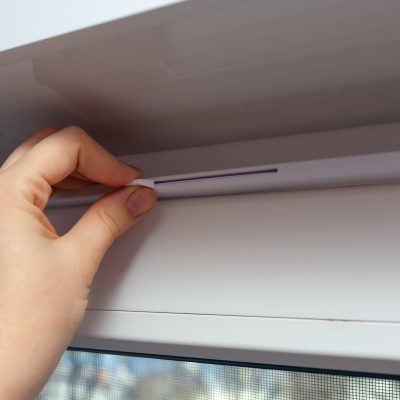
Condensation will not have time to form if there is a sufficient amount of airflow. A trickle vent can add air flow to your home even while all the doors and windows are closed.
If the weather permits, open your window for at least 20 minutes a day.
Prevent excessive moisture buildup
Here are a number of things you can do to prevent excessive water vapour in your home:
- Use a dehumidifier.
- Avoid drying clothes inside your house.
- Cover pots with their lids when cooking.
- Run bathroom and kitchen fans to improve air circulation.
- Keep doors to the kitchen and bathrooms closed and draught-sealed.
In the air gap
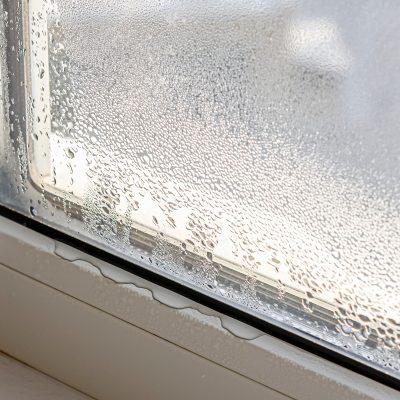
Unfortunately, if the condensation builds up in between the panes, the only way forward is to replace your double glazed window.
The gap in your double glazed window is designed to be air-tight. If condensation forms in the air gap, it means that ambient air has somehow squeezed into the seals on your window.
Condensation inside a double glazed window can:
- Decay the spacer
- Stain the inside of a glass
- Further degrade the sealant
What to Do When There’s Condensation in Your Double Glazed Window
The only solution is to get your window replaced. Some companies may offer to drill a hole through the pane or spacer bar to extract the water and add desiccants.
However, damaged seals are difficult to replace and moisture will eventually creep up. Any amount of air can slowly and steadily gather water inside the window to create more condensation.
If your double glazed unit is new, it might still be under warranty. You may contact your window manufacturer to discuss the warranty coverage.
How to Remove Paint
Before getting started, keep two things in mind:
- Never scrape a dry window, otherwise you’ll risk scratching it.
- Use only scrapers that are designed for glass window panes.
What you will need:
Window scraper: £3 to £10
Glass cleaner (preferably in a spray bottle)
Steps:
1. Spray the painted area generously with a glass cleaner and let it soak for a few seconds.
2. When scraping, angle the window scraper at least 45 degrees so that it goes right underneath the paint.
3. Wipe off peeled paint before the glass dries.
Conclusion
When buying windows, you will often see their estimated lifespan. This lifespan can only be achieved if you do maintenance work on your window, just a few times a year.
If any of your windows is damaged, it’s better to replace it immediately. Aside from obvious damage, there are other subtle tell-tale signs that a window needs replacement. Maybe your allergy has worsened or your electric bills are way higher without explanation.
To find the best deals on new windows, start with our free price comparison tool. Alternatively, we can request quotes on your behalf at no cost and with no obligation.
Now read:

Written By

Reviewed By
