
Swanson’s Law – Why Do Solar Panel Costs Decrease Over Time?
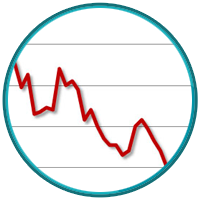 The price of solar generation has been falling exponentially for decades, a process that seems to be unstoppable.
The best explanation we have is Swanson’s law. As the CEO of SunPower in the 1980s, Swanson looked at solar panels and was struck by the comparison with computer chips. If chips could become twice as powerful every two years, what about solar?
What is Swanson’s Law, and how does it Work?
Swanson’s calculations suggested that the price of solar photovoltaic power drops by 20 percent every time the volume of panels shipped doubles. Historical data shows that he wasn’t far off, with a price fall of 50 percent every decade or so.
In 1977 solar panels cost $77 per watt, while by 2016 the cost had fallen to just $0.36 per watt.
What happened in between was beautiful. As the number of panels installed grew, their price dropped, leading to more installations, and further price drops – what economists call a “virtuous cycle.” By 2016, the price was more than 100 times lower than in 1977 – placing solar within reach of hundreds of millions of homeowners.
When you plot the decline in prices per watt on a graph, you come up with a neat line – averaging around 10 percent per year. For many people, that graph is evidence that Swanson had hit upon a law every bit as powerful as Moore’s celebrated law regarding microchip transistors.
A Powerful Explanation for Solar’s Rise
Swanson’s law is important because it provides good evidence for solar buyers that their investments make sense relative to other sources of energy.
Governments, companies and individuals face choices about which energy sources to invest in. Until recently, solar has off the pace in terms of price when compared with coal or nuclear. But, as the price of panels falls, and efficiency gains, that’s becoming a thing of the past.
Swanson showed that price declines weren’t short-term, or sudden. Knowing that solar prices are falling for good, and confident about future price levels, you can purchase solar installations knowing that the price level will remain competitive.
Will the Future Continue the Trends Detected by Swanson?
Can we be certain that the law will continue to operate in the same way in the future, or was it just a back of the envelope myth that appeared to work well for a while before breaking down?
Panels are constantly becoming more efficient and cheaper to manufacture. The rising demand noted by Swanson has been driving efficiency up and prices down for forty years.
There’s still room for improvement, reducing prices even further. Solar panel efficiencies in the field tend to level out at about 10-15 percent, while labs are constantly coming up with prototypes offering 20, 30 or 40+ percent efficiency. They are also finding cheaper production methods such as thin-film panels.
As companies become better at turning lab discoveries into marketable products, the exponential price decline of solar energy should continue.
What Does Swanson’s Law Mean for UK Home Owners?
Swanson’s calculations have important implications for those who are thinking about installing solar panels on their homes.
The first thing to remember is that, whether governments offer subsidies or not, your panels will still be efficient enough to generate electricity economically. Solar PV panels are now comparable with fossil fuels, and if they are properly installed they can be extremely lucrative.
However, you’ll need to act fast. Why? Because of the way feed-in tariffs work. These subsidies are provided by the government, allowing homes with solar panels to sell their unused electricity to the national grid.
The price you receive is related to the cost of your installation. The more expensive your panels, the more money you’ll receive. The tariffs are also being reduced every year, so the benefits are diminishing.
So, if you are interested in joining the solar revolution, keep Swanson in mind. The price of solar electricity is decreasing, panels are getting more efficient, meaning that now could be the ideal time to plan a rooftop installation.
Written By
