
The Impact of Double Glazing on Home Valuations in the UK
Are you looking to sell or rent out your house soon? Do you want to maximise your home’s earning potential?
Double glazing can increase your home’s valuation due to increased energy efficiency ratings, a standard that’s becoming in demand in today’s housing market. Based on the University of Cambridge’s research, homes with Energy Performance Certificate (EPC) ratings of F and E sold for around 6% more, while those rated D and C fetched 8% and 10% higher prices, respectively.
The highest premiums, at 14%, were seen in properties with ratings of A or B compared to those with the lowest rating of G.
With home prices anticipated to decrease this year due to economic challenges and higher interest rates, double-glazed windows can just be the boost that you need.
Why is double glazing important?
- In 2022, nearly 88% of homes in England were fully double-glazed, up from just 79% in 2012.
- Double glazing was among the top 10 in-demand features for homebuyers and renters in the UK in 2023.
Keep reading this guide to answer your questions on how double glazing can increase your home value and how to choose the best installation service.
What you’ll find here:
Impact of Double Glazing on Home Valuation
Long-term return of investment (ROI).
Here is the average cost of double-glazed windows per property type in 2026.
Let’s do some quick math. According to the government, the average price of semi-detached homes in the UK in November 2023 was about £277,000.
If the homeowner upgrades their semi-detached with midrange aluminium double-glazed windows (costing £8,500), and that boosts the EPC ratings to C, an additional £28,000 can be added to the house’s market value.
That’s over 3x the value of the £8,500 upgrade costs. Not a bad ROI!
If you add other features and home improvements, you can further push up your home value.
Research across 13 UK cities with similar properties showed that homes equipped with solar panels command a 25% higher selling price on average than comparable properties without them.
Below is the summary of how green investments can impact home value.
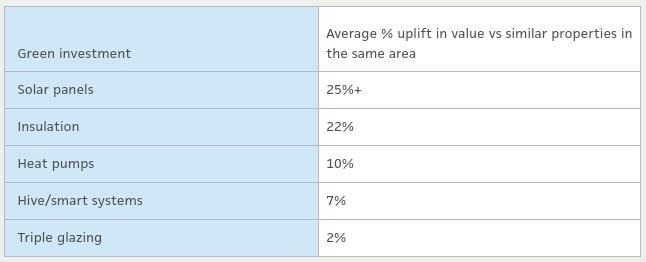
In addition, the UK Post Office reports that garden landscaping can add value by a whopping 77% and conservatories by 10%.
Ethical homebuyers/renters are willing to pay more for green homes.
In 2022, 80% of first-time and 73% of second-time buyers in the UK showed a high likelihood of considering a green home, according to Statista. The primary motivation for these buyers was the environmental benefits of green homes, despite a small fraction (5% of first-time and 6% of second-time buyers) being unlikely to consider such options.
Additionally, a 2023 survey by Make UK Modular reported that about 60% of renters and buyers prioritise the environmental performance of a new home, with half willing to pay a higher upfront cost.
It gets better. Nearly 80% would invest more initially for a home with lower energy bills, with the under-30 respondents placing the highest importance on greener homes and showing greater willingness to pay extra.
Government regulations/policies are encouraging more profitable properties.
GGF says that 80 million home windows would need to be replaced if the government wants to meet its net-zero pledge by 2050. In addition, changes to the Building Regulations in 2022 require new homes to reduce carbon emissions by 30%.
While it’s not illegal to have single-glazed windows, any replacement windows after April 2002 must be double-glazed to satisfy local authorities’ Energy Performance Certificates (EPC) ratings. The UK government recommends homeowners and landlords replace them with low-E double-glazed windows to increase energy performance.
Here’s the most important part. According to a trend analysis of the UK’s energy-efficient towns/cities, increasing the proportion of your home’s EPC from 20%-29% to 30%-39% in grade C or higher can nearly double its value, with a 17% rise in value observed within this range.
Although below 40% is still under the average for England and Wales, enhancing the share of EPCs with grade C and above can raise your home’s value by around £60,000.
What Makes Double Glazing so Effective?
Double-glazed windows feature an air gap between two glass layers, enhancing insulation against heat movement from outside to inside. This gap (typically between 5-12mm) is often filled with a gas like argon, chosen for its low heat conductivity, which further minimises heat loss.
In fact, using argon gas instead of air can increase the window’s insulation effectiveness by up to 30%. PVCu and aluminium frames, known for their durability and efficiency, are commonly used. In terms of the glass, they can be:
- float (flat finish)
- laminated (2 sheets), or
- toughened (with heating tempering)
But here’s where double-glazed windows really shine. A 2020 study showed that double glazing cut heat loss in half while letting in a good amount of light and heat compared to single glazing. Double-glazed windows also reduce the heat entering the building by 50-67% in warm climates, making them 2.5 times more effective at keeping heat out.
What are the Major Benefits of Double Glazing?
Lowers energy costs.
Acoustic insulation from double glazing improves a property’s energy rating. The Energy Savings Trust states that replacing single-glazed windows with A-rated or A++-rated double-glazing in a semi-detached house can save between £175 and £235 annually.
Reduces noise.
Double glazing absorbs energy from sound waves, with the dense argon gas and varying pane thicknesses disrupting wave frequency. Specialised noise reduction glass can further diminish sound by up to 40dB for homes in loud environments through an added laminated coating.
Enhances security.
Modern double-glazed windows incorporate advanced security features, including multi-point locking systems, making them more resistant to break-ins. These locks secure the window at various points along the frame, significantly decreasing the likelihood of forced entry and providing homeowners with added peace of mind.
Considerations For Double Glazing Installations
A -Listed Buildings and Conservation Areas
While double glazing seems like a sure bet for most homeowners, some properties would require more creative solutions. For example, listed buildings and conservation areas are special because of their history and architectural significance, so putting in new double-glazed windows can be tricky (if not entirely prohibited).
These buildings often have old-style wooden or stone window frames, and groups that protect historical sites (like English Heritage) usually don’t allow big changes like new windows. It’s best to consult with your Local Planning Authority before making any changes.
A possible solution is secondary glazing, where you add a second glass layer behind the original window without changing the old frames, and it’s easy to take out if needed. Specific window types also work well with these preserved buildings.
Timber sash windows are commonly chosen in conservation areas for their ability to mimic the original window styles of these locations. Casement windows can also be suitable if they match the existing style of the area.
Upfront costs
Double-glazed windows with uPVC frames are the most cost-effective choice, with aluminium being pricier and timber being the most expensive. uPVC and aluminium need minimal maintenance, whereas timber requires regular oiling and repainting.
Comparing windows of the same material, casement windows are the most budget-friendly, sash and tilt-and-turn windows fall in the mid-price range, and bow and bay windows are typically the most costly.
Here are the average costs for various window types.
Bow Windows
| Number of Panels | Window Size | Cost Range |
| 3 | 2,400 – 3,000 mm wide / 1,200 – 1,500 mm tall | £1,000 – £1,400 |
| 4 | 3,000 – 3,600 mm wide / 1,200 – 1,500 mm tall | £1,500 – £1,800 |
| 5 | 3,600 – 4,000 mm wide / 1,200 – 1,500 mm tall | £1,900 – £2,400 |
Casement Windows
| Frame Material | 600mm x 900mm | 900mm x 1,200mm | 1,200mm x 1,200mm |
|---|---|---|---|
| uPVC | £150 – £450 | £400 – £600 | £650 – £900 |
| Aluminium | £500 – £700 | £650 – £900 | £750 – £1,100 |
| Timber | £800 – £1,050 | £1,200 – £1,400 | £1,350 – £1,600 |
Sash Windows
| Frame Material | 600mm x 900mm | 900mm x 1,200mm | 1,200mm x 1,200mm |
|---|---|---|---|
| uPVC | £580 | £750 – £850 | £935 |
| Aluminium | £700 – £1,200 | £1,300 or more | £1,500 or more |
| Timber | £1,300 | £1,900 or more | £2,200 or more |
Bay Windows
| Number of Panels | Window Size | Cost Range |
| 3 | 2,400 – 3,000 mm wide / 1,200 – 1,500 mm tall | £1,000 – £1,400 |
| 4 | 3,000 – 3,600 mm wide / 1,200 – 1,500 mm tall | £1,500 – £1,800 |
| 5 | 3,600 – 4,000 mm wide / 1,200 – 1,500 mm tall | £1,900 – £2,300 |
Tips for Selecting a Reliable Installer
You can’t go wrong with professional installation providers with the right accreditations. Some of the certifications or memberships to look for in window installers are from:
- FENSA – a government-approved program that ensures compliance with building regulations for replacement windows and doors. All FENSA-approved installers, from large national brands to small local firms, undergo regular assessments.
- The British Fenestration Rating Council (BFRC) – the UK’s leading authority for certifying the energy performance of windows and doors, using a rainbow-coloured window energy rating (WER) scheme. This scheme rates windows from A++ for the highest energy efficiency to E+ for the least.
- The Glass and Glazing Federation (GGF) – a government-recognized body representing and overseeing firms engaged in manufacturing, supplying, or installing glass and glazing products in the UK and globally.
Companies with showrooms can also be a good choice because you can see the products for yourself and consult with on-site experts.
A more convenient method to look for the best providers in your area is to try out the Ecopreneurist quotation tool, which compares the top 4 quotes from your local installers (with no obligations to purchase their service!).
In addition, reading reviews and comparing warranty conditions can inform you which installers offer the best after-sales service. Generally, window installation warranty for different parts can last 5-10 years.
Here are some of the warranty terms to give you an idea:
| Warranty | Length |
|---|---|
| Hardware (frames, handles, sashes, etc.) | 10 years |
| Workmanship | 5-10 years |
| Sealing | 10 years |
| Stain and paint finishes | 5-8 years |
To recap:
- Double glazing can push your home price up by an average of 10%.
- Double-glazed windows offer long-term ROI, fetch more market demand, and comply with government regulations.
- Upgrading to an EPC rating of C or higher can double your home valuation.
- The upfront costs can range from £600 (for uPVC) to £21,000 (for wood), depending on your property type, number of windows, and materials used.
- Installers with accreditations and reliable after-sales services are the best providers.
Now read:
Written By

Reviewed By
